


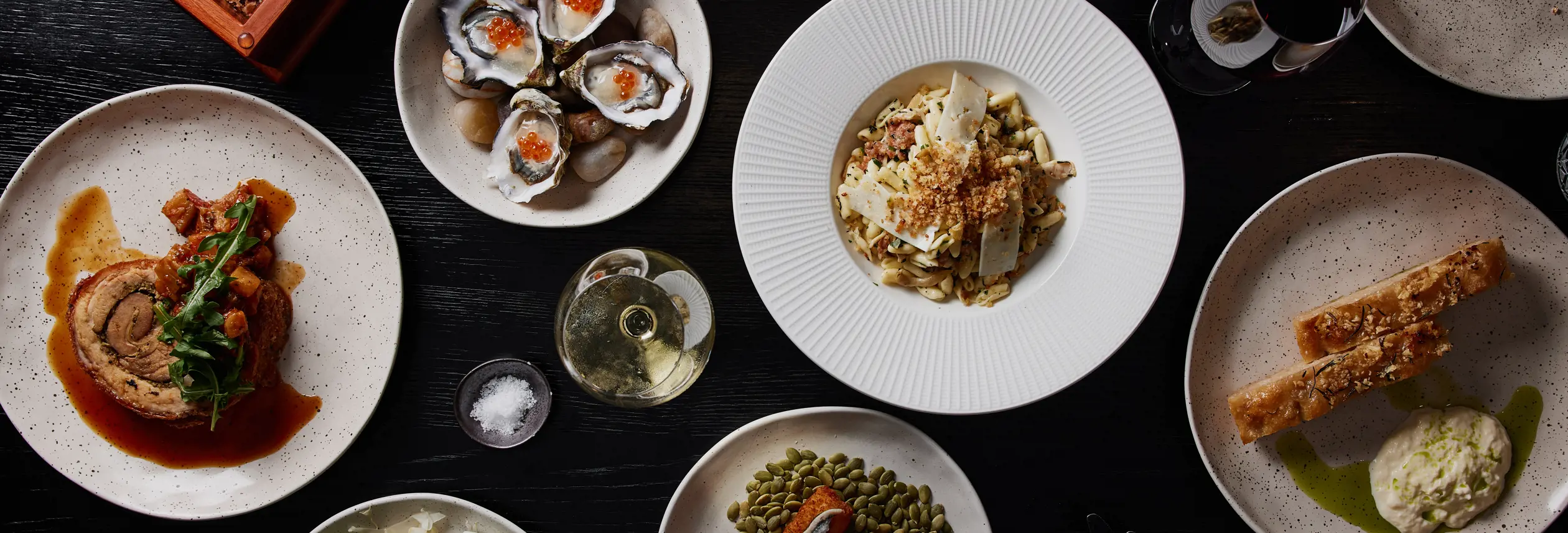
Mövenpick Hotel Hobart
Samuel Shelley
From acclaimed restaurants and cellar doors to craft breweries, distilleries, providores and vibrant farmers' markets, the island's food and drink experiences offer something for all tastes.
It is not just the chance to sample produce straight from the source. It is the quality of what is on the plate or in the glass. It is the emphasis on sustainability. It is the connection to place, how easy it is to meet the makers at cellar doors, farm gates, fishing wharves and local markets. That is how things work in Tasmania, making food and drink experiences high on any visit.
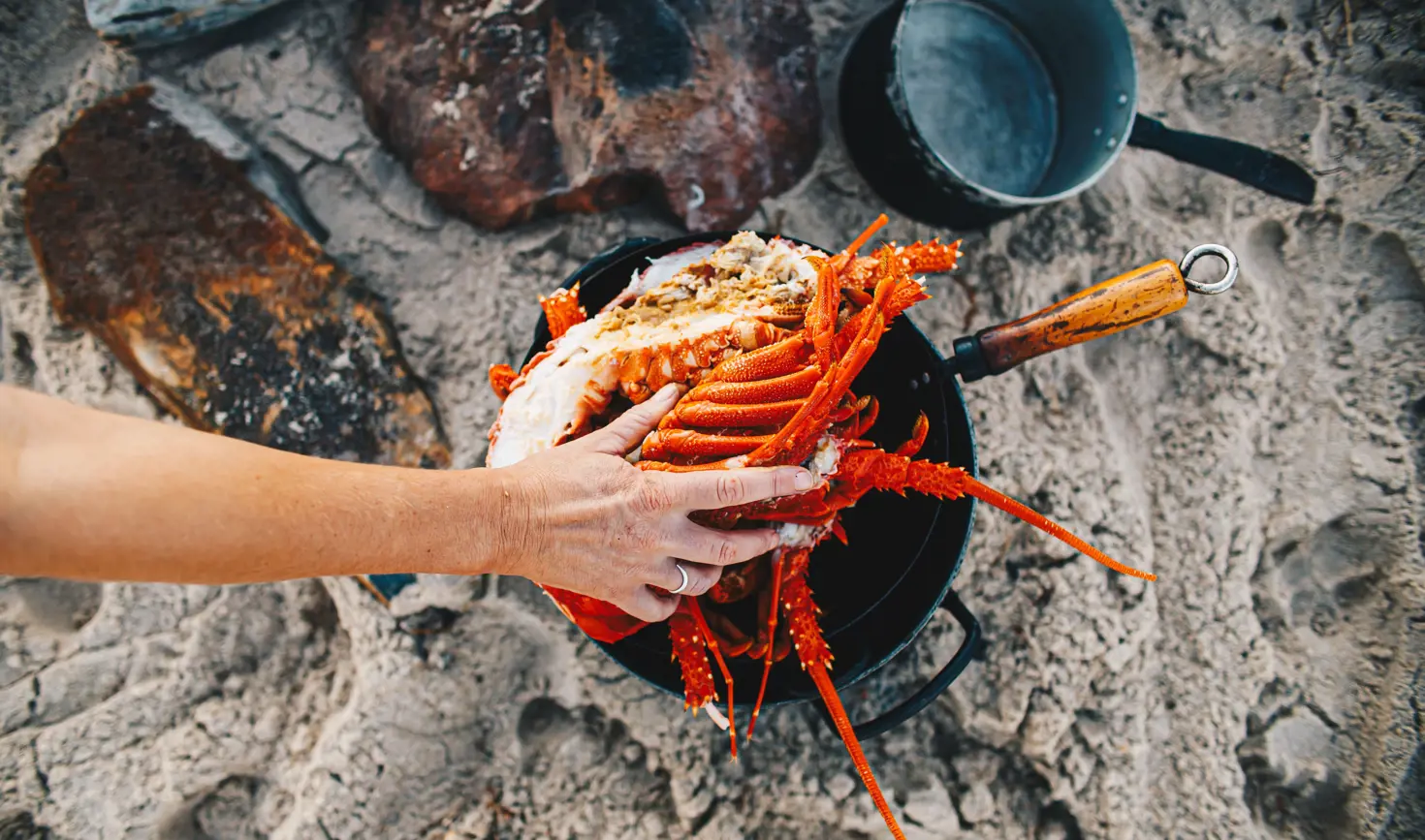
Tasman Sea Salt, Little Swanport
Jasper Da Seymour
Visitors support local operators and producers in a variety of ways from eating out, buying local produce, local markets and events and through agritourism experiences.
Many visitors enjoy connecting directly with farm and rural life and agritourism is a growing sector. Agritourism plays a strong role in regional dispersal and can provide a new revenue stream for producers. More than 330,000 visitors (25%) told us they visited a local food producer in the last year alone.
Visiting a winery remains a popular way to experience agritourism, with Tourism Research Australia estimating that wineries attract more than 7.5 million visitors each year. In Tasmania, more than 290,000 visitors (21% of all visitors) visited a local winery, with winery trails across several key wine regions making it easy for them to build a trip around cellar door experiences.


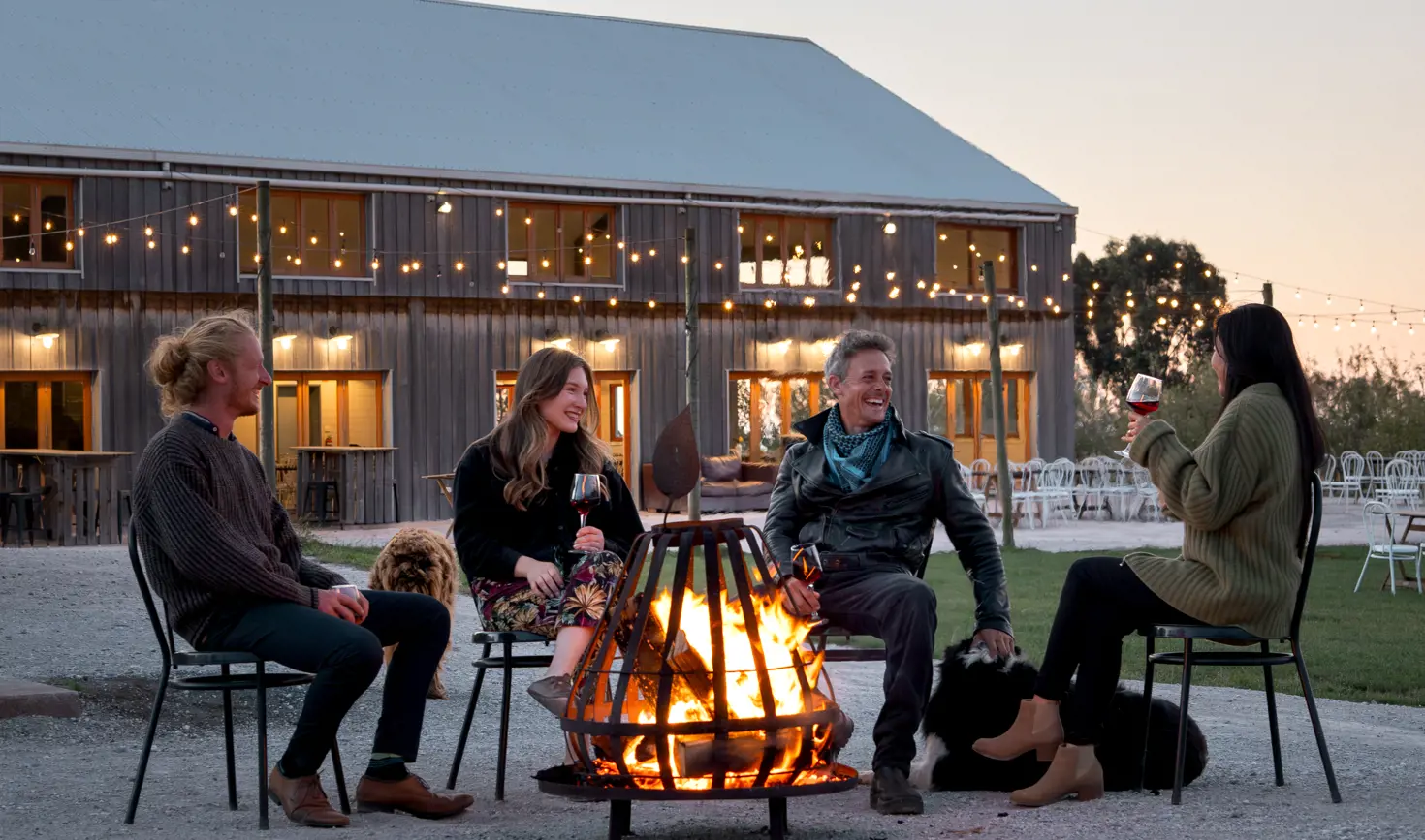
Mount Gnomon Farm, Penguin
Oscar Sloane
Direct connection to creators: Tasmania's compact size makes it easy for producers to sell direct. Visitors have many planned and impromptu ways to meet makers, growers and producers face to face, sharing in their stories and discovering the provenance of what they eat and drink.
Distinctly Tasmanian way of life: Real people, niche production and a 'downshifted' lifestyle set against wilderness and natural landscapes.
Land and sea diversity: From winemakers to whisky distillers, marine farmers to truffle growers, Tasmania offers variety across a small, accessible island.
Quality small batch produce: Tasmania is known for its diversity of sustainable, small batch produce. Paddock to plate, farm to fork and dive to dish, the food miles are few on this small island.
Straight from the source: Tasmania's size and its range of farm gates, cellar doors and distilleries gives visitors the chance to connect face to face with makers, hear the stories behind the bottle and plate, try and buy from the people who actually made it, often within sight of where it was produced, and discover a slower, more intentional way of life.
Makers forging their own path: Winemakers, whisky distillers, cheese artisans and truffle growers. Tasmania is an island of makers, farmers and creators transforming local ingredients into fine flavours.
Distinct growing environments: Tasmania's ancient wilderness, craggy peaks, rolling plains and dramatic coastlines create distinct growing conditions across the state, with producers located island wide.
All data sourced from the Tasmanian Visitor Survey YE Sept 2025