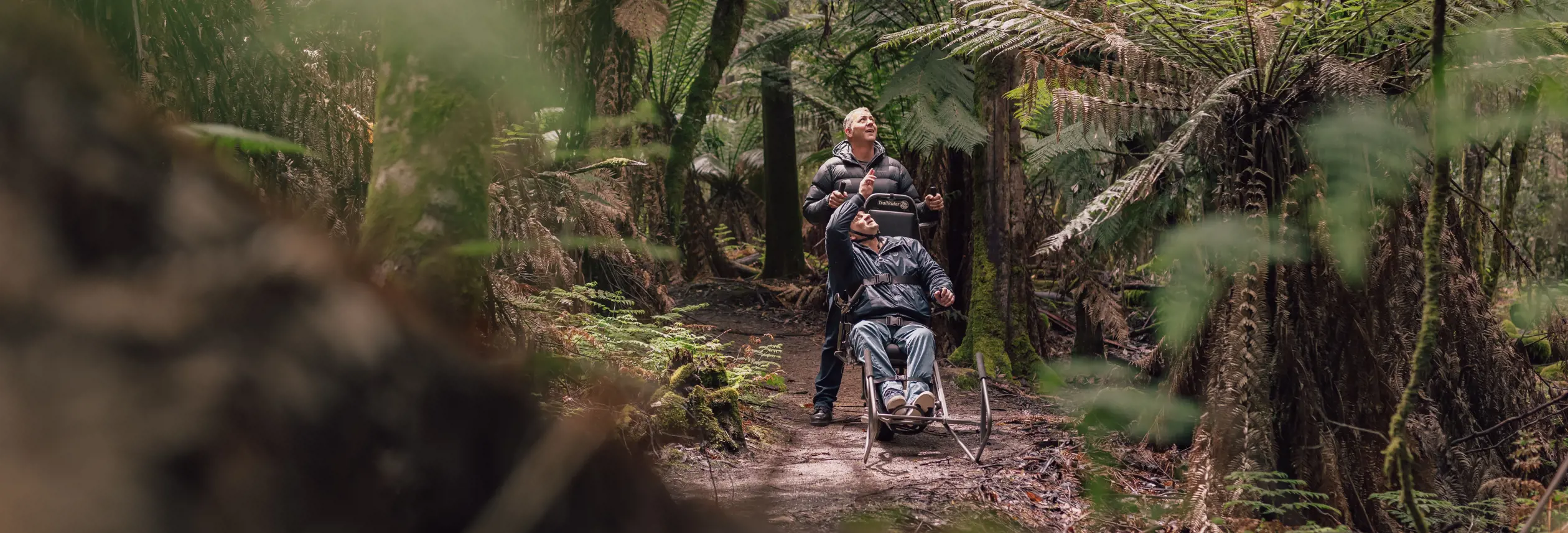
TrailRider on the Tall Trees Walk, Mount Field National Park
Dearna Bond
Accessible and inclusive tourism
Inclusive tourism is about enabling people with access requirements, whether that's mobility, vision, hearing or cognitive, to experience travel independently, with equity and dignity.
It's achieved through universally designed tourism products, services and environments and with an ageing population, the proportion of Australian travellers with accessibility needs is expected to grow.
In Australia, about 75 per cent of people with a disability travel regularly, and there's little difference between people with or without disabilities when it comes to what motivates them to travel, how they make travel decisions, or where they choose to go. Tasmania has the highest rate of disability among all states and territories at 26 per cent, well above the national average of 18 per cent. We also have the oldest population in Australia, with nearly 20 per cent of people aged 65 years and over.
The term 'Inclusive' is preferred as it signals that a product or service is available to everyone, not exclusively designed for those with a physical disability. 'Accessible', on the other hand, can give the impression that something has been adapted specifically for people with a physical disability and is only for that use.
How your business can be more inclusive
Making your business more inclusive isn't just about physical access. It covers the entire customer experience, and it doesn't need to be costly. Below are some ways you can create a more inclusive experience for all your customers and you can find further information in the Australian Government's 'WELCOME Framework' and the Department of State Growth's accesible business toolkit, which both offer practical tips and suggestions for operators.
Communicate your business' inclusive offerings
For some people, the level of accessibility your business offers is crucial to their decision to visit. Use your website, advertising and promotional material to let people know how your business supports their access requirements. Many businesses lose potential customers when people can't easily find the information they're looking for on a website within two clicks. Be specific about the facilities you have. For example: 'ramp access to venue and toilets', 'rest areas available', 'tactile visual aids in walkways and on stairs'.
Make sure you have a phone number and email available for customers to contact you for more information.
Ensure your website is accessible
One of the simplest things you can do to make your website more inclusive and accessible to people with low vision, while also improving your SEO is to ensure all images include image alt text.
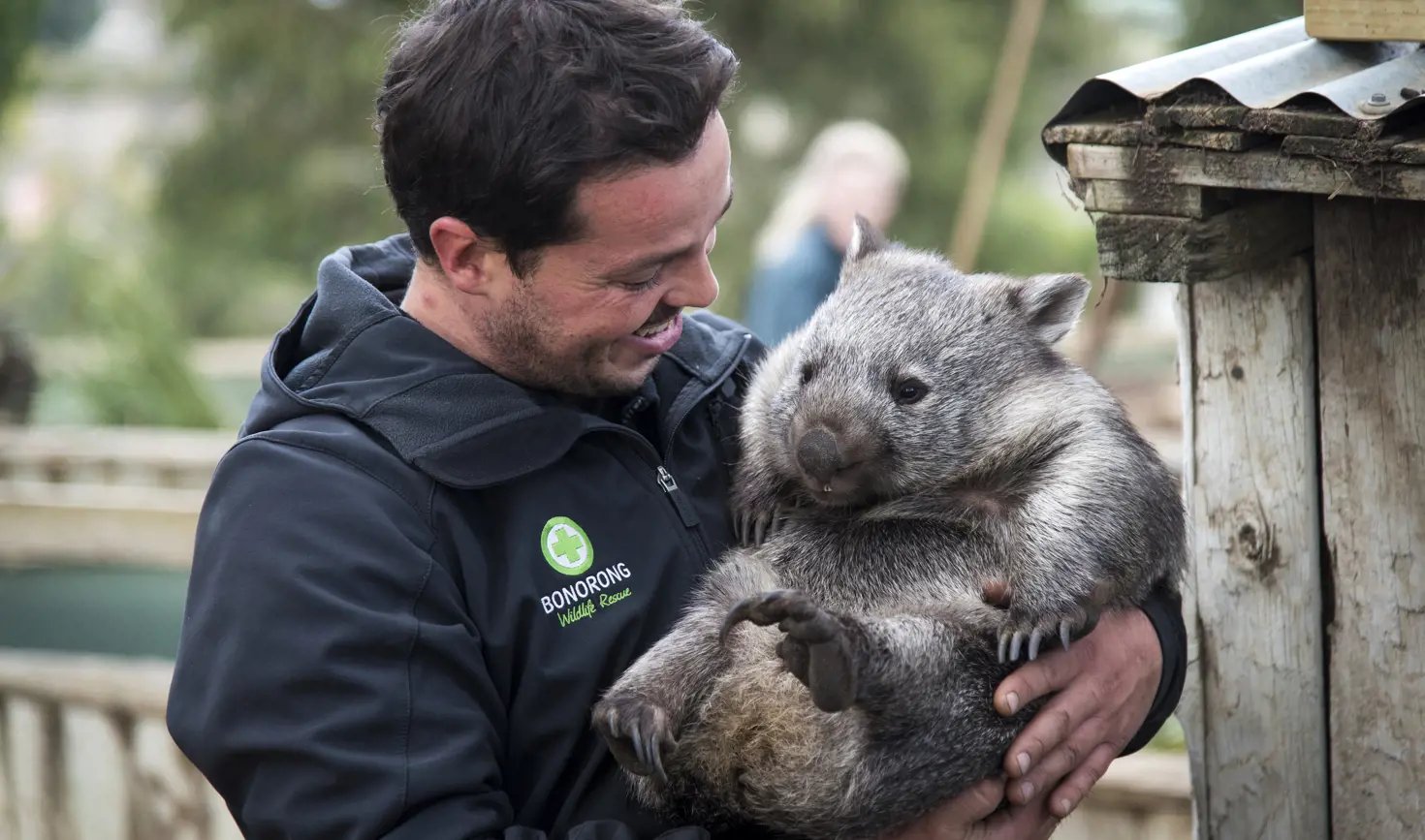
Bonorong Wildlife Sanctuary, Brighton
Tourism Tasmania and Rob Burnett
Alt text provides descriptive text for images, context for screen readers and Search Engine Optimisation (SEO) and helps screen readers read alt text aloud so visually impaired users can understand what is shown in an image. It helps search engines understand what is shown in an image, improving image searches, and provides meaning when images fail to load or for users who prefer text.
Alt text should be short, no more than two sentences and should describe what can be seen in the photo vs a caption which gives additional (often unseen) information about the photo.
Example:
Alt text: Bonorong Wildlife Sanctuary keeper Greg Irons holds a wombat at the Sanctuary, Brighton
Caption: Bonorong Wildlife Sanctuary, Brighton
WCAG (Web Content Accessibility Guidelines) is a handy resource with everything you need to make your website inclusive. Alt text is easy to learn and essential for increasing accessibility to your site. Visit the Moz website for more information on alt text and the best ways to add it to your site's images.
Link to other inclusive experiences
Tourism and hospitality operators are dependent on, and complement, each other's offerings through their proximity. When a person with particular access needs considers booking a holiday, they'll often evaluate other offerings in the local area for inclusive options before making a decision. Make sure you have information available and can provide cross referrals to other inclusive tourism experiences, helping to present your area as an inclusive tourism destination.
Train and support your staff
Provide training to your staff on disability awareness and how to support travellers with disabilities. Offer general disability awareness training to all staff and more detailed accessibility training to customer facing staff. Back this up with guidance, resources and ongoing support.
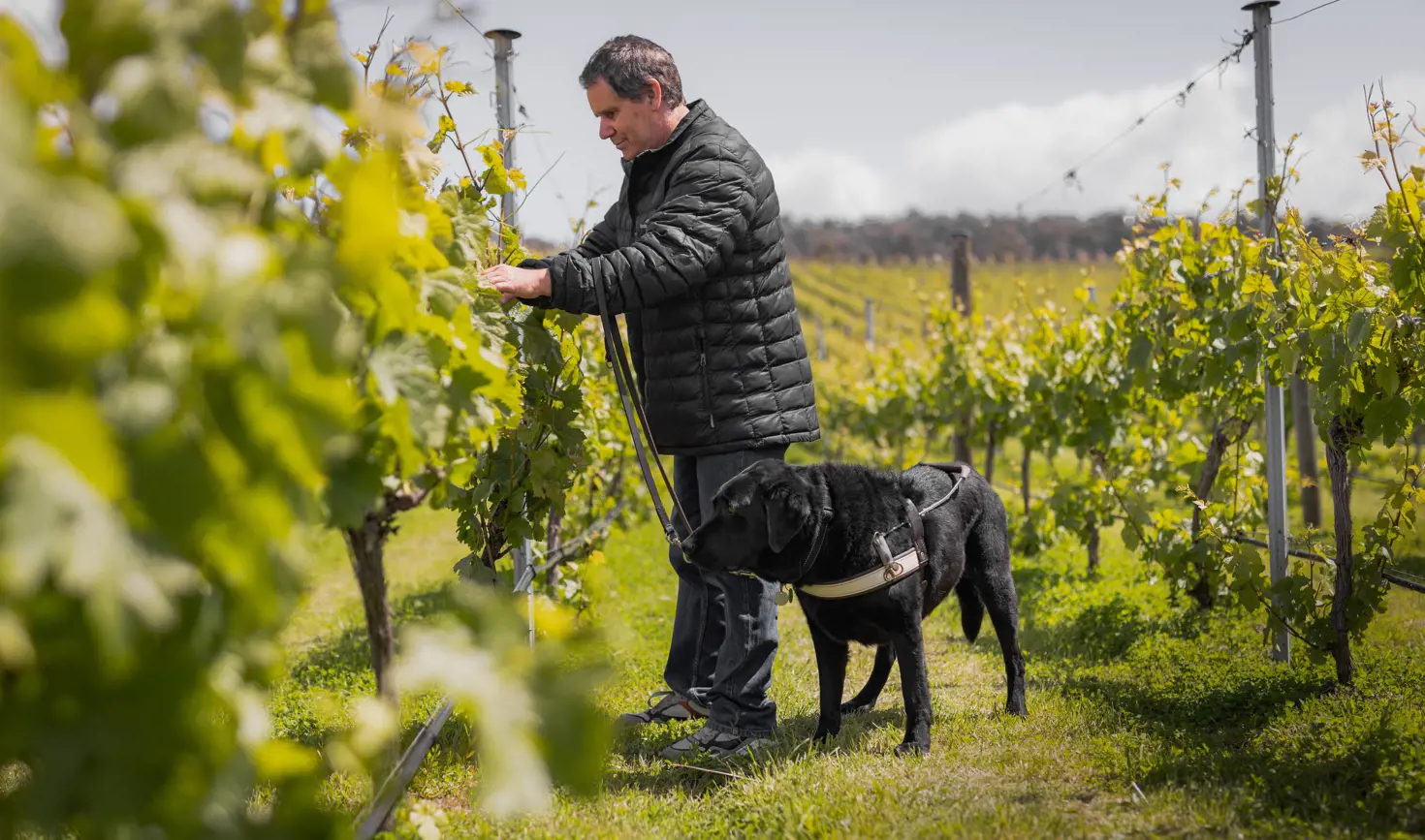
Puddleduck Vineyard, Coal River Valley
Dearna Bond
Accessibility training should cover a wide range of topics including:
- An overview of the types of disabilities
- Disability etiquette and terminology
- Education on appropriate and inappropriate terms
- General awareness of common accessibility barriers and features
- Tips for assisting customers with disabilities
- Specific knowledge of onsite accessibility features and how to use them
Training should also account for unconscious bias, including stereotypes and assumptions, and actively work to counter it.
Update your ATDW profile
Make sure you complete or update the accessibility criteria on your ATDW product profile so your business can be found through the 'options' filter on the Discover Tasmania website. For more information and advice about how to register with ATDW, click here.
Use inclusive images
When promoting your business or visitor experience to the accessible travel market, use images that connect with the audience. Tourism Tasmania's Visual Library includes a selection of inclusive and accessible images and is free for use by the tourism industry and travel trade partners. For more information, visit the Visual Library, submit a registration application and then search for the Theme: Accessible tourism album.
Go one step further
Develop accessible audio content
Tasmania has become the first tourism destination to launch accessible audio content with Vacayit, a new audio based tourism platform for blind and low vision (BLV) travellers. Tourism Tasmania's 51 audio guides are available on the Vacayit app and are live on Discover Tasmania website, enabling greater access for travellers with disabilities to a range of tourism experiences.
Complete an accessible tourism module
The Tourism Industry Council Tasmania (TICT) has an Accessible Tourism module available as part of the Australian Quality Tourism Program. Completion of the module will provide your business with an accessibility guide for potential customers and you'll be provided with a brandmark to promote your business to the inclusive travel market.
Become a Companion Card affiliate
A Companion Card allows people with a significant and permanent disability to buy a ticket at participating venues and facilities, and receive a second ticket for their carer or companion at no charge. If your business provides a ticketed service, find out more at Services Tasmania.
Where to find more information
Explore further
Learn about how travellers with accessibility needs are a key contributor to the visitor economy.
-------------------
Sources
All data sourced from Accessible Tourism 2024