
Farmland outside Oatlands
Alastair Bett
Improving your AI visibility
AI tools are increasingly shaping how visitors discover and choose travel experiences, which means the information you publish online matters more than ever.
This page walks through practical steps to help your business appear accurately and consistently when AI tools are used to research, plan and recommend travel in Tasmania. Whether you're just starting out or ready to go further, the actions here are designed to be straightforward and build on each other over time.
Just geting started
- Find out what AI currently says about you. Open ChatGPT or Claude and paste in your website URL. Ask: what can you tell me about this business and who would you recommend it to? Read the response. Is it accurate? Is it specific? Does it reflect what makes your business distinctive, or does it sound like it could describe anyone? Then ask: what information is missing that would help you recommend this business more confidently? That answer is your action list.
- Check your Google Business Profile. Log in and go through every section. Hours current? Photos recent? Q&A section populated? Reviews responded to specifically, not just thanks for visiting but something that references the actual visit? If you have not touched your profile in over six months, spending an hour on it now will have more impact than almost anything else you can do.
- Check your consistency. Search for your business name in Google. Look at every listing that appears. Does your business name appear the same way in each? Does your location description say the same thing? Do your experience names match? Inconsistency creates confusion for AI systems. Consistency builds confidence.
Ready to go further
Rewrite your headings to match how guests search
Your page headings are the single highest-leverage element on your website for AI citation. To find the right language, open an AI tool and ask: what questions would someone ask when searching for a [your experience type] in [your region] in Tasmania? Ask for twenty variations. Use the language that comes back. The formula is simple: what you specifically offer, what makes it distinctive, where it is.
Our Walks becomes Guided multi-day wilderness walks in the Tasmanian highlands. Our Rooms becomes Off-grid luxury cabins sleeping two to four guests, mountain views, central Tasmania. Apply this to every page on your site.
Give each experience its own page
Focused pages outperform comprehensive guides. A dedicated page about your three-day guided walk will be cited more consistently than a page that mentions the walk alongside ten other things. If your experiences are currently all on one page, consider separating them.
A good test: open each experience page and ask an AI tool to describe what you offer. If the answer sounds vague, the page is trying to do too much.
Use specific, sensory language in your descriptions
Generic phrases like stunning wilderness location or authentic local experience appear across thousands of businesses and give the AI nothing to distinguish you by. The name of the mountain visible from your breakfast table. The fishing guide who has worked these waters for thirty years. The smell of the bush in late autumn. These details make your content specific to you and valuable to AI systems building recommendations.
Keep your content current
Pages updated within the past one to three months are cited more consistently than older content. The sweet spot is 30 to 90 days old. Very fresh content under 30 days can underperform, likely because new pages have not yet built retrieval signals. A simple monthly habit: update one thing on your website and one element of your Google Business Profile. It compounds over time.
The technical bit
You do not need to understand all of this yourself. But knowing it exists means you can ask better questions of whoever manages your website, and avoid spending money on a rebuild before checking the basics.
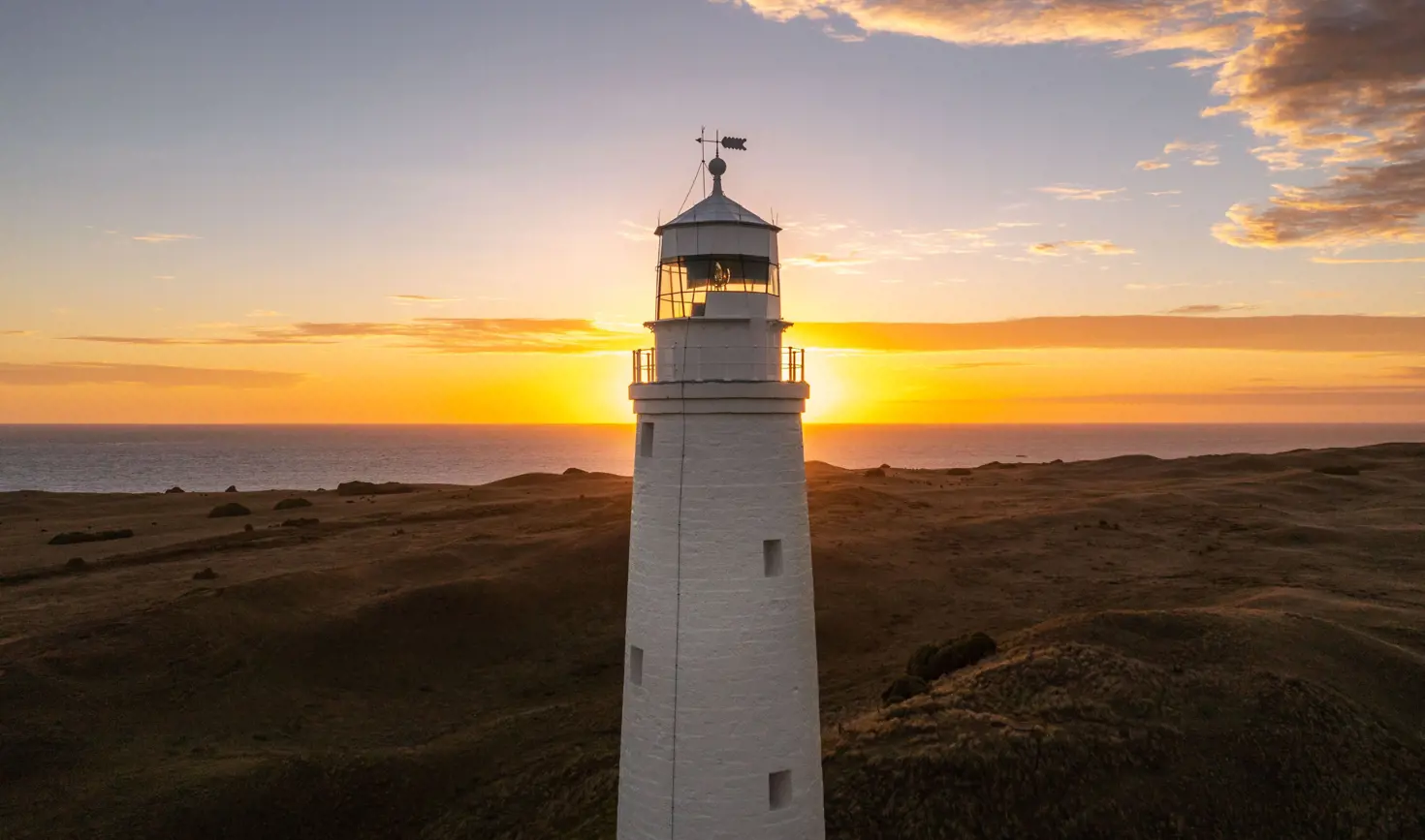
Cape Wickham Lighthouse, King Island
Emilie Ristevski
Validating what you're doing
Run the AI audit prompt quarterly and track how the response changes over time. If the AI's description of your business becomes more specific and accurate, your content is working.
Search for your experience type, not just your business name. Three day wilderness walk Tasmania. Luxury lodge near Cradle Mountain. Note whether you appear and how you are described.
Ask an AI tool: can you recommend places to stay in [your region] in Tasmania? Do you appear? Is the information accurate? Is anything missing or wrong?
The research behind the advice
Recent research analysing over 16,000 queries and 350,000 pages found that the single strongest predictor of AI citation is retrieval rank, where your page appears when an AI tool runs its underlying web search. 1
Note: this research specifically measures ChatGPT's citation behaviour. Findings are directionally applicable across AI tools but technically specific to ChatGPT's retrieval system.
A page at position one has a 58% citation rate. A page at position ten has a 14% citation rate. Retrieval position refers to where your page appears in ChatGPT's own internal web search, not your Google search ranking. These are related, strong SEO improves both, but they are not identical. 1
The same research confirmed that heading match is the strongest on-page signal, focused pages consistently outperform comprehensive guides, and domain authority shows no positive correlation with AI citation. What matters is content quality and relevance at the page level.
Test your own AI visibility
Prompt 1 - AI audit
I would like you to review my website, [insert your website URL here], and tell me how AI friendly it is. Please explain in plain language whether search engines, chatbots and AI systems can easily understand, trust and use my site's content. Include whether my pages are easy for AI to read, index and trust; if my content and images are properly described; whether I am missing anything that would help AI or search engines recognise my site as credible and authoritative; simple, actionable suggestions to improve it with no technical jargon; and a score out of 10 for how AI friendly and credible my site currently is. Rank your suggestions based on the impact they would have on improving my score.
Prompt 2 — Follow up
What information is missing from this website that would help you recommend this business more confidently to a potential visitor?
-------------------
Sources
1. AirOps and Kevin Indig, The Fan-Out Effect, April 2026